Overwatch League Midseason: Analysis, Meta Shifts & Predictions
The Overwatch League Midseason is here, and the intensity is palpable. Forget the regular season’s ebb and flow; this is where legacies are forged and strategies are put to the ultimate test. The pressure cooker environment of the Midseason throws teams into overdrive, forcing them to adapt or crumble. It’s not just about winning; it’s about proving who can evolve the fastest and execute under immense pressure.
This isn’t just another tournament; it’s a critical juncture. Teams reassess their compositions, players fine-tune their skills, and coaches scramble to anticipate the evolving meta. We’ll dive deep into the heart of the OWL Midseason, dissecting team performances, revealing the meta shifts that define the landscape, and, of course, offering some predictions based on observed trends and strategic nuances. Get ready for an in-depth exploration of competitive Overwatch at its finest.
Understanding the Overwatch League (OWL) Midseason Landscape
The Overwatch League (OWL) stands as the premier professional arena for Blizzard Entertainment’s team-based shooter, Overwatch. Structured into seasons, OWL brings together teams from across the globe, battling it out in a series of matches and tournaments. Each season is meticulously designed, featuring stages that lead up to a grand finale where the ultimate champion is crowned.
The midseason represents a critical juncture in the OWL calendar. Nestled between the initial stage and the final push towards playoffs, it’s a period of intense scrutiny and strategic recalibration. Teams use this time to assess their performance, identify weaknesses, and implement changes to their rosters or strategies. The midseason isn’t just a pause; it’s a pivotal opportunity for teams to redefine their season’s trajectory.
For some teams, the midseason offers a chance to solidify their dominance, fine-tuning proven strategies and maintaining momentum. For others, it’s a lifeline—a chance to overhaul struggling lineups, experiment with new talent, and climb back into contention. The competitive scene during the midseason is often characterized by high stakes and unexpected upsets, as teams fight tooth and nail to position themselves for a strong finish.
The impact of the midseason extends beyond individual matches. Trades, roster adjustments, and meta shifts can have a ripple effect throughout the league, influencing team compositions and strategic approaches. This dynamic period keeps fans engaged and adds an extra layer of excitement to the OWL season.
Analyzing Key Team Performances
Diving into the heart of competitive Overwatch, understanding the dynamics of top-performing teams is crucial. It’s not just about raw skill; it’s about strategy, synergy, and adaptability. The current OWL standings offer a snapshot, but the real story lies beneath the surface, within the data and the gameplay.
Take, for instance, a team consistently topping the charts. Their win rates speak volumes, but a deeper dive reveals more. What maps do they dominate on, and why? Often, it’s a combination of factors: a strong tank line creating space, DPS players with impeccable aim and game sense, and support players orchestrating the team’s movements with precision. Analyzing their team compositions reveals favored strategies. Do they favor dive comps, poke comps, or something more unconventional?
Observing their gameplay, one can identify key moments. A perfectly timed ultimate combination, a strategic flank that catches the enemy off guard, or the ability to adapt to a changing situation mid-match – these are the hallmarks of a top team. For example, in a recent match I spectated, a team was down two maps. Instead of panicking, they identified their weaknesses and adjusted their strategy, focusing on map control and exploiting the enemy’s predictable patterns. This shift led to a remarkable comeback, showcasing their mental fortitude and strategic depth. This is the kind of tactical read that separates good teams from legends.
However, even the best teams have weaknesses. Perhaps they struggle against certain team compositions or maps. Identifying these vulnerabilities is crucial not only for opponents looking to exploit them but also for the team itself to address and improve. Team analysis ultimately is not about painting a perfect picture, but about understanding the complex puzzle of skill, strategy and how it all comes together in the arena.
Meta Shifts and Strategic Adaptations
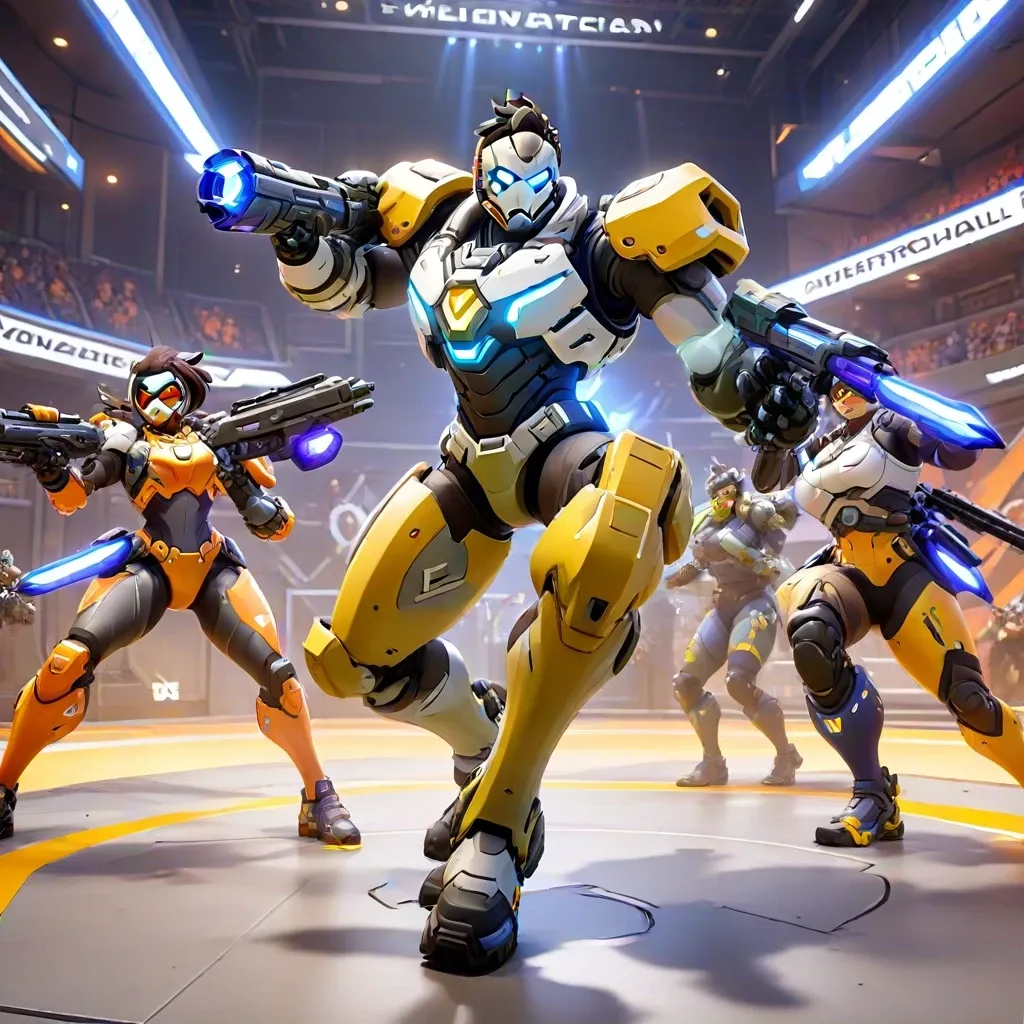
The Overwatch meta is in constant flux, a churning sea of hero picks, counter-strategies, and adaptations driven by frequent patch updates and the ever-evolving understanding of the game by its players. Recent patches have acted as tectonic shifts, reshaping the landscape of competitive play and forcing teams to re-evaluate their core strategies.
One notable trend is the diversification of hero compositions. The previously dominant compositions have given way to more flexible strategies, with teams experimenting with a wider range of hero combinations. The rise of certain heroes, boosted by buffs or favorable interactions with other changes, invariably leads to a counter-response, a readjustment in team compositions designed to exploit weaknesses or neutralize strengths.
Successful adaptation hinges on a team’s ability to analyze these changes and translate them into actionable strategies. Teams that understand the intricacies of hero synergies, map control points, and ultimate economy are better positioned to thrive. Consider teams who quickly adopted strategies around newly buffed heroes, showcasing an understanding of the hero’s potential and integrating it seamlessly into their existing framework. Alternatively, some teams stubbornly stick to outdated strategies, struggling to find success as the meta leaves them behind. This highlights the importance of agility and a willingness to embrace change.
Understanding these meta shifts is critical for remaining competitive. Teams must study patch notes, analyze their own gameplay, and continuously adapt to the ever-changing dynamics of Overwatch.
Player Spotlight: Impactful Performances and Key Strategies
In the fast-paced arena of competitive Overwatch, individual brilliance often ignites a team’s path to victory. This section shines a spotlight on pro players known for their clutch plays, innovative strategies, and overall dominance, examining the elements that separate them from the pack.
One prime example is Kim “Proper” Dong-hyun, a flex DPS player renowned for his exceptional mechanical skill and game sense. His ability to seamlessly switch between heroes like Tracer, Genji, and Widowmaker, adapting to the ever-changing flow of the game, makes him a formidable opponent. A key performance highlight includes his performance in the Overwatch League 2022 playoffs. His calculated aggression and pinpoint accuracy consistently turned the tide in crucial team fights.
Player strategies are just as vital as individual skill. Consider the tank playstyle of Choi “Hanbin” Han-been, known for his mastery of Reinhardt and Winston with the Dallas Fuel. Instead of focusing solely on damage mitigation, he utilizes aggressive positioning and calculated dives to disrupt the enemy backline, creating space for his DPS players to capitalize. This approach, while risky, forces opponents to react and opens up opportunities for his team.
Exceptional Overwatch skills extend beyond raw aim and reaction time. Players like Lee “Faker” Sang-hyeok are masters of mind games and prediction. By analyzing opponent tendencies and exploiting subtle cues, they can anticipate enemy movements and proactively counter their strategies. This level of strategic depth is what elevates these pro players to true game-changers, capable of single-handedly shifting the momentum of a match.
These pro players showcase the impact of skill and strategy. Their ability to execute key performances under immense pressure embodies the essence of competitive Overwatch. By studying their gameplay and dissecting their approaches, aspiring players can gain valuable insights to elevate their own abilities and contribute to team success.
Forecasting the Remainder of the Season
Predicting the trajectory of an esports season is a complex blend of analyzing past performance, understanding current team dynamics, and anticipating shifts in the game’s meta. As we look towards the second half of the season, several key factors will likely dictate which teams rise to the top and which ones falter.
G2 Esports’ victory at BLAST Open London 2025 has cemented their position as a top contender in Counter-Strike. Their ability to overcome Team Vitality, a traditionally strong team, signals a new era of dominance. Whether they can maintain this momentum throughout the season remains to be seen, but their current form suggests they are a team to watch closely.
In the Valorant scene, the upcoming VALORANT Champions Paris 2025 will be a crucial battleground. Teams that adapt quickly to new strategies and integrate stand-in players effectively will likely have an edge. The performance of Maximillian “Demon1” Mazanov, representing Dragon Ranger Gaming as a stand-in, will be particularly interesting to observe. His performance could significantly impact DRG’s chances and set a precedent for other teams considering roster changes.
Dota 2’s The International 2025 (TI14) is also shaping up to be a thrilling competition. With Nigma Galaxy already securing a top 8 position, the pressure is on for other teams to demonstrate their capabilities. The resurgence of Chinese Dota, highlighted by Xtreme Gaming’s strong performance, suggests a possible shift in regional power dynamics.
Overall, the second half of the season promises intense competition and potential upsets across multiple esports titles. Teams that demonstrate adaptability, strategic depth, and strong teamwork are most likely to succeed. Keep an eye on both established giants and emerging underdogs as they battle for supremacy.
Actionable Insights for Aspiring Players and Analysts
Want to level up your Overwatch game? It’s not just about reflexes; it’s about smarts. For aspiring players, the first step is understanding your hero. Don’t just pick a character because they look cool. Dive deep into their abilities, strengths, and weaknesses. Experiment in quick play or training modes to truly grasp how they function in different scenarios.
Next up: VOD review. Record your own gameplay and watch it back. Brutal, right? But incredibly effective. Identify where you made mistakes – positioning errors, missed opportunities, wasted ultimates. Compare your gameplay to professional players. What are they doing differently? How can you incorporate their strategies into your own game?
Communication is key. Overwatch is a team game, and a silent team is a losing team. Even if you’re shy, try to call out enemy positions, ultimate statuses, and your own intentions. A simple “Reaper behind!” or “I’m going to flank” can make a world of difference.
For aspiring analysts, the game is a giant puzzle waiting to be solved. Don’t just look at the kill feed. Dive into the stats. What heroes are being played? What maps favor certain compositions? How effective are specific strategies? Tools like the Overwatch League replay viewer can be invaluable for studying professional matches.
Focus on identifying patterns. Which team tends to win the first fight? How do teams adapt to counter-strategies? Analyze the nuances of team compositions and individual player performance. The more you understand the underlying mechanics of the game, the better you’ll be at predicting outcomes and providing valuable insights.
Finally, be prepared to learn and adapt. The Overwatch meta is constantly shifting. New heroes are released, balance changes are implemented, and strategies evolve. Stay up-to-date on the latest trends and be willing to adjust your own gameplay and analysis accordingly.
Conclusion
The Overwatch League Midseason is a critical juncture, a moment to reassess strategies, player performance, and team dynamics. This review underscores the league’s intense competitive scene and the constant evolution required to stay ahead. The strategies and team compositions that dominated at the start of the season may not guarantee success moving forward.
Staying informed and analytical is key for anyone invested in the Overwatch League. Understanding these shifts allows for a deeper appreciation of the game and informed predictions about future performance. Apply these insights to refine your own understanding of Overwatch; the meta is always changing, and continuous learning is the only way to truly master the game.